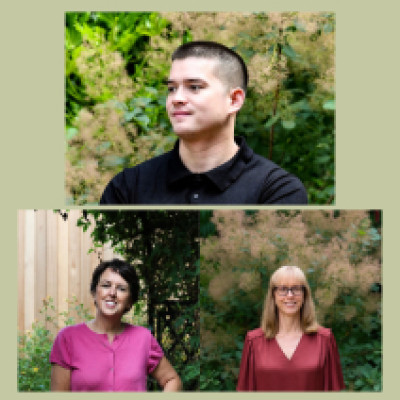
The family of Chloe Ellis, a 29-year-old woman who died from a fatal blood clotin September 2024, is calling for urgent reforms in NHS communication practices. Their appeal follows a critical failure to share vital information about her condition between NHS 111 and the A&E department at Dewsbury and District Hospital which could have helped to prevent her death.
On August 31st, Chloe Ellis had used the NHS 111 online assessment service after experiencing chest and back pain and breathlessness. Based on her described symptoms and medication history, the 111 algorithm identified a suspected pulmonary embolism, a blood clot blocking the blood supply to her lungs. 111 then advised Chloe to go straight to a local emergency department. Crucially, this risk assessment was not communicated to Chloe, nor was the information made available to the medics who treated her at Dewsbury and District Hospital.
Chloe was unfortunately misdiagnosed with a respiratory infection and discharged from hospital. Sadly, Chloe collapsed at the home she shared with husband, Dan Ellis, 31, three days later on September 3rd. In spite of the efforts made by medical staff to treat Chloe, she died later that day at Leeds General Infirmary.
Sharing of information between NHS 111 and overstretched A&E Departments nationally should be the norm, not the exception
At Chloe’s Inquest held at Wakefield Coroners Court on 9th June 2025, Coroner Oliver Longstaff concluded that failure to obtain Chloe’s full medical history at A&E, combined with the inaccessibility of her 111 online assessment, likely cost Chloe her life. The
Coroner concluded that had staff known about the medication she was taking, Chloe should have been diagnosed with a pulmonary embolism, and would have received life-saving treatment. He went on to issue a Prevention of Future Deaths Report to West Yorkshire Integrated Care Board (ICB) in which he raised concerns that the outcomes of NHS 111 online assessments should be accessible to emergency department clinicians. Unfortunately, West Yorkshire Integrated Care Board has not previously commissioned accessibility to NHS 111 online assessments for local hospitals.
Throughout the UK, practice varies as to whether NHS 111 assessments are shared with A&E departments. Chloe’s family are now campaigning for it to become standard practice, as it could save lives.
Chloe’s mother, Jean Walker, expresses that “Chloe did everything right. She sought help and gave accurate information to the NHS 111 call handler,” Jean explained. “111 identified a condition that can be fatal if left untreated, yet that information wasn’t shared with anyone, not even Chloe, so not only was this assessment not passed on to clinicians at A&E, even Chloe wasn’t able to communicate this herself. Had this vital information been shared, she would have received treatment that would have undoubtedly saved her life.”
Chloe’s story sheds light on a broader issue within the NHS, that services like 111, A&E and GP practices often operate with limited visibility of each other’s assessments and interactions with patients.
As part of Labour’s 10-year NHS plan, it has promised to transform the NHS app into “a world-leading tool for patient access, empowerment and care planning,” with the aim to act as “a doctor in your pocket.”
Partner at Stewarts law firm and former nurse, Amy Fielding, has been working with Chloe's family to raise awareness of this problem and urge the government to implement much needed changes quickly and consistently across the NHS.
Amy says, “The current system needs to change quickly. If a suspected diagnosis can be passed directly to A&E this would save, an already overstretched emergency service, significant time and resources. Patients assume that their records follow them, when that simply isn’t the case. Part of the problem is that A&E does not fall under the same ‘arm’ of the NHS as 111 and therefore relies on regional care boards to expressly implement a system of information sharing.”
The government's 10-year plan for the NHS should also include action to ensure interoperability and communication across all NHS urgent care services.”
Fundraising walk in Chloe’s memory
In Chloe’s memory, a group of friends and family known as The Dozy Wanderers are undertaking a 213-mile fundraising walk from Ingleborough, finishing in Scarborough. The walk will take place from 18th - 25th July, and will raise funds for The Yorkshire Wildlife Trust, where Chloe worked as a Planning Advocate.
The walk will involve passing through Paull Home Strays in Hull, a nature reserve that Chloe was instrumental in preserving in the face of a planning application that threatened to disrupt the local ecosystem. Chloe led a team advocating for the preservation of this habitat before the Planning Committee, leading to the refusal of the application.
Chloe was highly respected by her colleagues, remembered fondly for her knowledge and dedication to wildlife conservation. Chloe travelled to London in summer 2024 to take part in the Restore Nature Now march, to call on all politicians to take action to restore nature and address climate change in the UK.
The walk will also be raising money for Dementia UK, in memory of Christine and Tony Bairstow, Chloe’s Auntie and Uncle. The fundraising target of £15,000 will be shared between Dementia UK and The Yorkshire Wildlife Trust.
All media enquiries should be directed to:
NatalieRodgers@Scala.uk.com and RebeccaFinley@Scala.uk.com
t: 0114 4070159